Monthly Newsletter - August 2026

Updated: Sep 8

Quick Links
Our Director's Update
Dear Parents and Friends,
A very warm welcome to the 2026–2027 academic year at AISB!
It has been wonderful to see our campuses come alive again as students and staff return, classrooms fill with energy, and friendships are renewed. We are also pleased to welcome many new students and families to our community, as well as new staff. We hope you have already begun to feel a strong sense of belonging and connection within our school.
The beginning of a new academic year is always an exciting time. It brings new opportunities to learn, explore interests, develop new skills and set personal goals. Our focus remains on ensuring that every student feels supported and encouraged to achieve their Personal Best, both academically and personally.
As we look ahead, there is much to look forward to across AISB. From engaging classroom learning and STEAM experiences to sport, performing arts, After School Activities and opportunities to contribute to our community, we look forward to seeing our students make the most of everything the year has to offer.
Thank you to our students, families and staff for such a positive start to the year. We look forward to another year of learning, growth, connection and community together.
Warm regards,
Henri Bemelmans
Director

Celebrating Success
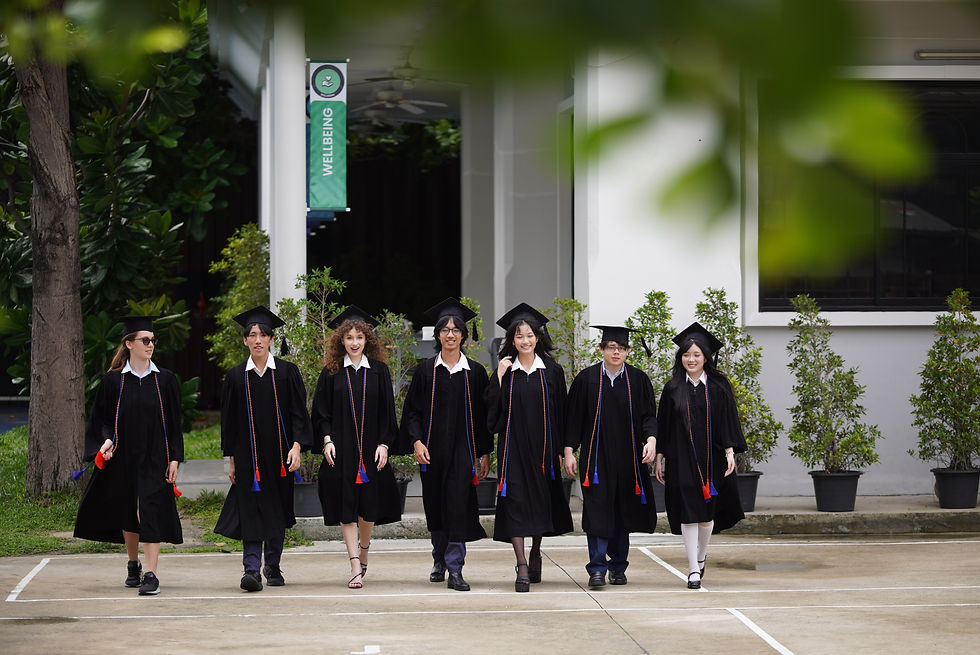
Celebrating Our 2026 IGCSE & A Level Results 🎓
AISB is proud to celebrate the achievements of our 2026 IGCSE and A Level students.
Our IGCSE cohort achieved an outstanding 99.6% pass rate, with 40% of grades at A–A* and 86% at A–C*. These results reflect the dedication, resilience and Personal Best of our students, alongside the support of our teachers and wider AISB community.
Our A Level students also reached an important milestone, achieving a 95% pass rate as they take their next steps towards universities and opportunities in Thailand and around the world.
Congratulations to all our students, families and teachers on these achievements!


Read more about our 2026 IGCSE and A Level results
Early Years Update
Written by Sheridan Musto, Head of Early Years and Soi 20 Campus
It has been a busy and exciting first few weeks at Soi 20 as we have welcomed our children and families back for another school year, along with many new students joining our community across Early Years, Foundation and Year 1.


The beginning of a new school year is an important time for building connection, belonging and a sense of security. Our teachers have been spending these first weeks getting to know their children, establishing classroom routines and helping everyone become familiar with their new environments.


For some children, starting or returning to school is an easy transition, while others may need a little more time, reassurance and support. This is a very normal part of the settling process, particularly for our youngest learners. Our teachers work closely with children and families during this time, supporting each child at their own pace while gently building confidence and independence.

Already, we are seeing children becoming increasingly comfortable with their routines, forming new friendships and developing a strong sense of belonging within their classrooms.
Learning, Playing and Exploring
Across the campus, our classrooms and learning environments are coming to life. Children have been busy exploring new resources, engaging in play, sharing ideas, creating, building, investigating and learning alongside their peers.


In Early Years, play continues to be at the heart of our approach. Through carefully planned environments and meaningful interactions with teachers, children are developing their communication, social-emotional, physical and thinking skills throughout their day.
Our outdoor spaces are equally important, and this year we are excited to have extended our playground into a new green space that we have affectionately named The Meadow. The additional space provides even more opportunities for active play, exploration, imaginative experiences and connecting with the natural environment.


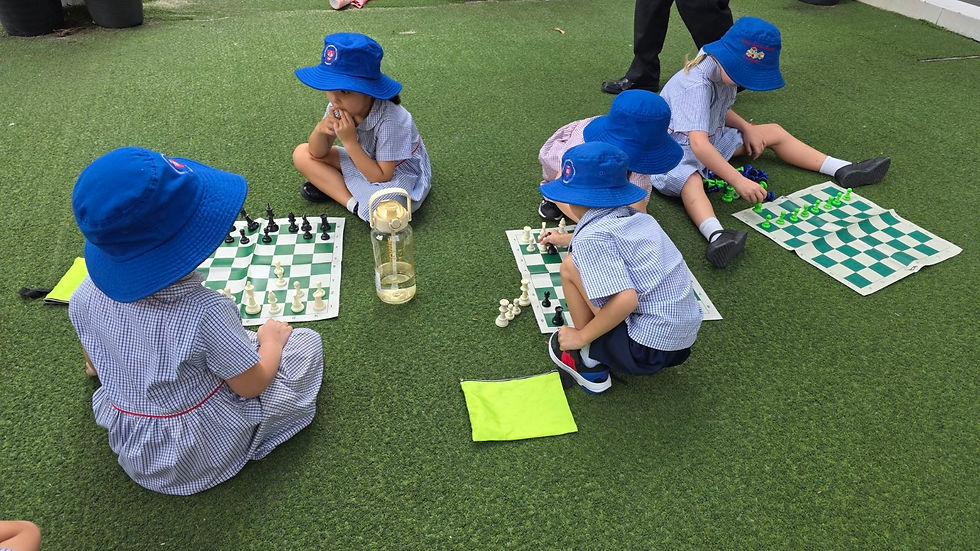
Our Foundation and Year 1 students have also been enjoying chess during outdoor play. It has been wonderful to see children gathering around the boards, learning how the pieces move, challenging their friends and developing their problem-solving and strategic thinking, all while enjoying being
outdoors.
Making a Splash!
We are very pleased to welcome Ms Lauren, our new Foundation swimming teacher, to Soi 20 this year.

Our Foundation students have made a fantastic start to their swimming lessons, developing confidence in the water while continuing to build important swimming and water-safety skills. Swimming is always an exciting part of the week for our children, and we look forward to seeing their skills and confidence grow throughout the year.
Connecting With Our Families
A big thank you to all of our parents who joined us for our Meet the Teacher sessions over the past week.

These sessions are an important opportunity for families to learn more about what happens within their child’s classroom, what children will be learning throughout the year and the routines and expectations that support them each day.

Most importantly, they allow us to continue building strong partnerships between home and school. We greatly appreciate the time our families took to join us, ask questions and learn more about their child’s year ahead.

Thank you also to our teachers for sharing their knowledge, enthusiasm and passion for teaching with our families.
Our Soi 20 Community
One of the things we value most at Soi 20 is the opportunity for children to feel known, connected and part of a close school community. Whether it is a Nursery child taking their first steps into school life or a Year 1 student confidently navigating the campus, we want every child to feel that Soi 20 is a place where they belong.

We are incredibly proud of the positive start our children and staff have made. There is already so much learning, laughter, curiosity and connection happening across the campus, and we are looking forward to all that the year ahead will bring.
Primary Update
Written by Hannah Carew, Head of Primary
What a wonderful start to the new academic year! We are incredibly proud of all our students who have settled back into school so positively, enjoying learning, playing and reconnecting with friends. It has also been wonderful to see our new students seamlessly join the AISB community and begin forming new friendships.


This year, we are fortunate to have our newly designed and renovated Lower Primary Campus, providing a wonderful transition for our Foundation and Year 1 students as they move from their Early Years environment into Lower Primary. It has been fantastic to see the children embracing their new learning spaces.


Thank you to all the families who joined us for our Meet the Teacher Afternoons. There was certainly a wonderful buzz across our campuses throughout the week!
On Friday 28th August, we also celebrated our first Spirit of AISB Challenge Day. Students and staff enthusiastically participated in activities designed to strengthen our sense of community and celebrate our school values in action.


September brings many more opportunities for our community to come together, including our Australian Father’s Day Donuts for Dad breakfast, Student Council elections for Years 5 and 6, Next Stop Puberty parent workshops, and Bounce Back assemblies. Alongside these events, our students will continue to enjoy many new and engaging learning opportunities across the Primary School.
We look forward to another exciting month of learning, connection and community at AISB!
To stay informed about what is happening in your child’s classroom, please remember to read your child’s weekly Homeroom newsletter, which is emailed home every Friday.
Secondary Update
Written by James Worland, Head of Secondary
The 2026–2027 academic year has got off to a fantastic start in Secondary, with a real sense of energy, enthusiasm and community across the school. Our opening days gave students the opportunity to reconnect with friends, welcome new members of our community and take part in a range of activities designed to build relationships across year groups.

It has been particularly pleasing to see students embracing new opportunities, supporting one another and settling so positively into the routines and expectations of the new school year.

As we move further into the term, we are excited to build on this strong start and continue providing students with opportunities to thrive both inside and beyond the classroom. With a busy programme of learning, activities, events and community opportunities ahead, there is plenty to look forward to.

We are also delighted to have begun connecting with our Secondary families through events such as the Year 7 Meet and Greet and our Senior School Parent Information Session, and we look forward to continuing to strengthen these partnerships throughout the year.

Building Strong Foundations in Homeroom
The school year has begun with a wonderful sense of purpose in our Secondary Homeroom classes. One of the first activities every class has completed is the creation of a Homeroom Charter. This is a shared agreement that is co-constructed by students and their Homeroom teacher.
Rather than being given a list of rules, students work together to discuss the type of classroom community they want to be part of. They identify how they want to treat one another, how they want to be treated, and the behaviours that will help everyone feel safe, respected, and ready to learn.
We are proud of the thoughtful conversations taking place across our Homeroom classes.

Year 7 Daintree - Example Homeroom Charter
Preparing Students for Their Future with Unifrog
Careers education at AISB Secondary is a journey that develops alongside each student. Beginning in Year 7 and continuing through to Year 12, our programme encourages students to build self-awareness, investigate pathways, and take increasing ownership of their subject selections and future aspirations.

Throughout Term 1, every Secondary student will be mentored through the Unifrog platform by their Homeroom teacher during dedicated Homeroom sessions. These sessions provide students with the opportunity to explore their interests, reflect on their strengths, and begin connecting their learning with future possibilities.
As students progress through Secondary School, Unifrog becomes an important tool for exploring subject choices, career pathways, university options, apprenticeships, and opportunities around the world. More importantly, it helps students develop the confidence and agency to make informed decisions about their future.
STEAM Update
Written by Mr Gareth Openshaw, Head of STEAM
Onwards and upwards in the STEAM department! We hit the ground running at the start of the year, with every class buzzing with activity from day one.
STEAM is all about interdisciplinary approaches to real-life problem solving, and that is exactly what we strive for at AISB. While we are fortunate to have an incredible team of specialist teachers across our STEAM subjects, the real magic happens when we connect them. By collaborating across homerooms and specialist disciplines, our team has designed learning units anchored in our first overarching theme of the year: Identity and Belonging.

A New Approach in Primary - To create a more cohesive experience for our students, the Primary School has updated how lessons are delivered at the Innovation Centre.
Previously, Primary students studied Visual Art and Design during one semester and Digital Technologies in the other. While this offered broad exposure, it limited opportunities for cross-subject integration. To solve this, students will now experience a 4–5 week rotation between subjects.

This new format allows specialist teachers to meet with classes more frequently and co-design tightly integrated units. Ultimately, this gives our students a richer, more meaningful learning experience, showing them firsthand how multiple disciplines work together to solve real-world challenges.
Creative and Performing Arts
We are delighted to announce the launch of our 2026 school production, Alice in Wonderland!
Following an incredibly competitive round of auditions, we are thrilled to have officially cast this year’s production. We were blown away by the confidence, creativity and talent on display, with students bringing their own imaginative interpretations to the wonderful and eccentric characters of Wonderland. It was also fantastic to see so many new faces stepping forward to audition.

The cast will now begin rehearsals as they prepare to bring this magical, curious and wonderfully strange world to life. From Alice’s journey down the rabbit hole to encounters with some of Wonderland’s most memorable characters, this promises to be a fantastic production filled with creativity, energy and plenty of theatrical magic!
Save the date! Parents are warmly invited to join us for the Parent Performance on Thursday 3 December at 4:30pm.
We look forward to sharing this exciting production with our school community!
Sports and ASA
We are thrilled to announce that all sports trials have now been completed, and our teams are ready to take on an exciting term of competitive sport! A huge thank you to every student who came out to try their best — your energy and enthusiasm set the tone for a fantastic season ahead.
This year, our sports program continues to grow, with five competitive teams:
🏈 Football
🏊 Swimming
🏸 Badminton
🏀 Basketball
🏐 Volleyball (new addition this year!)
We're especially excited to welcome Volleyball as our newest addition to the sports program. We can't wait to see this team develop and grow throughout the season.
About BISAL
Our school proudly competes as part of the BISAL (Bangkok International School Athletic League), competing within the Southern Conference. Throughout the term, our teams will face off against other schools within the league through both Super League matches and weekend tournaments.
Super League matches — played on weekdays
Tournaments — played on weekends
Super League Season
This term, we're proud to have the following teams representing our school in the BISAL Super League:
U18 Football
U13 Basketball
U15 Basketball
These teams will compete in matches throughout the week. Fixtures will be shared in the coming weeks, so keep an eye out for updates on when and where to cheer on our athletes!
Tournaments to Look Forward To
Mark your calendars! Here's what's coming up this term:
Tournament | Date |
BISAL Badminton Tournament | 26 September 2026 |
BISAL U18 Football Tournament | 3 October 2026 |
BASIS Swim Meet | 31 October 2026 |
BISAL U13 Basketball Tournament | 7 November 2026 |
BISAL Basketball Tournament | 28 November 2026 |
Soi 20 After School Activities & OSHC Update
It has been an exciting first week of our Term 1 After School Activities (ASAs)! Children have begun exploring a wide range of experiences, from sports and swimming to science, technology, creative and interest-based activities. This first week has provided an opportunity for children to become familiar with their teachers, routines and activity spaces, while teachers begin to understand each child’s interests, strengths and individual starting points.
Soi 20 ASA Video: https://www.facebook.com/share/v/1BqnPrJ3XJ/
In Swimming ASA, children are developing their swimming skills alongside important water and pool safety knowledge. This week, children practised walking safely around the pool, listening to adults using both their eyes and ears, giving others enough space in the water and keeping their hands to themselves. Teachers are also getting to know each swimmer’s current abilities so that skills can be developed and appropriately challenged throughout the term.
Our Computer Coding ASA also got off to a busy start. Children shared their ideas about coding and explored how computers have developed and why coding is important. Through introductory drag-and-drop activities, they began learning to recognise directions, follow a sequence of steps, complete tasks and use problem-solving skills to work through different levels.
In Mad Scientists ASA, our young scientists put on their lab coats to investigate the question, “Where does the colour go?” Using leaves, rubbing alcohol and paper towel chromatography, the children explored how the pigments inside leaves can be separated to reveal different colours. This hands-on investigation encouraged children to observe closely, make discoveries, ask questions and begin developing an understanding that everyday natural materials can contain more than we can initially see.
OSHC – Time to Play, Connect and Unwind
Our Outside School Hours Care (OSHC) programme provides children with a comfortable, nurturing environment at the end of their school day. Rather than extending the school day with more formal lessons, our programme provides opportunities for child-initiated and child-led play, creativity, exploration, social interaction and quieter experiences. Children might choose to create and construct, explore resources, play with friends or simply have some time to relax.
These experiences continue to support the EYLF, including children’s sense of wellbeing, agency, creativity, communication, relationships and confidence as learners. For our younger children who still need daytime sleep, mattresses and a comfortable rest space are available, allowing their individual sleep and rest needs to be supported while attending OSHC.
We have loved seeing the children begin their ASA and OSHC experiences this week and look forward to sharing more highlights with families as the term continues.
AISB Chess Championship 2026
Chess is a valued part of school life at AISB, giving students opportunities to develop concentration, strategic thinking, problem-solving and resilience through play.
We’re excited to bring students together for the AISB Chess Championship 2026, where they can put their skills into practice, challenge themselves and enjoy the game alongside fellow chess players.

The championship is a chance to celebrate not only competitive play, but also the dedication, focus and sportsmanship that students demonstrate throughout their chess journey.
Whether they are experienced players or still developing their skills, every student is encouraged to take part, enjoy the challenge and learn from the experience.
Good luck to all our players! ♟️🏆
Explicit Instruction at AISB
This month, we are revisiting an article shared last year to prepare for an upcoming series on our four pillars of school-wide pedagogy. Together, these pillars form the foundation of our shared approach to high-quality learning and teaching.

Explicit Instruction at AISB: Supporting Every Learner
At AISB, our school-wide pedagogy is centred on High-Quality Learning and Teaching, designed to ensure every student is supported, challenged and able to reach their full potential. This approach is guided by four key pillars: explicit instruction, differentiated instruction, collaborative learning, and assessment for learning.
Together, these pillars shape how teaching and learning take place in our classrooms. Teachers use clear and structured instruction to build essential knowledge and skills, adapt learning to meet the needs of individual students, create opportunities for collaboration and inquiry, and use assessment to guide next steps in learning. Underpinning this approach is our moral purpose of creating a safe, supportive and engaging environment where students develop strong academic foundations alongside critical and creative thinking, effective communication, and personal, social and global awareness.
One of the key approaches underpinning our teaching and learning is explicit instruction. This approach ensures that students clearly understand what they are learning, why they are learning it, and how to be successful. Explicit instruction involves teachers making learning goals, success criteria and key concepts visible to students, guiding them step-by-step through new knowledge and skills before providing opportunities for practice and application.
Research consistently shows that explicit instruction is a highly effective teaching approach when combined with strong curriculum design and high-quality classroom practice. Educational researcher Allan Luke describes explicit instruction as teaching where learning goals, expectations and key knowledge are made clear and transparent to students, allowing teachers to guide learners step-by-step through new skills and concepts (Luke, 2013). Large-scale research studies and guidance from the Australian Education Research Organisation (AERO), highlights the impact of clear explanations, modelling and guided practice in supporting student achievement. At AISB, explicit instruction forms an important part of our teaching approach, ensuring students build strong foundations in literacy, numeracy and critical thinking while being supported to understand not just what they are learning, but how to be successful.
Educational researcher Professor Allan Luke explains that explicit instruction is characterised by clear learning goals, structured teaching and transparent expectations for students. In this model, teachers carefully guide students through new concepts, model strategies, and provide feedback to support understanding. This approach helps ensure that all students, regardless of background or prior knowledge, have access to the essential skills required for learning success.
At AISB, explicit instruction is particularly important in the early development of literacy and numeracy. Teachers break complex skills into manageable steps and demonstrate how to apply them. For example, in reading lessons students are explicitly taught sound–letter relationships, vocabulary and comprehension strategies. In mathematics, teachers model problem-solving strategies and guide students through worked examples before students practise independently.
Research from Australian education organisations supports this approach.
The Australian Education Research Organisation (AERO) highlights explicit instruction as a high-impact teaching practice because it provides clear explanations, modelling and guided practice that support student learning. However, explicit instruction does not mean passive learning or a narrow curriculum. As Luke notes, explicit teaching is most effective when it forms part of a broader teaching repertoire and curriculum approach, rather than being the sole method used in classrooms.
At AISB, explicit teaching is combined with inquiry, collaboration, discussion and real-world learning experiences so students can apply their knowledge in meaningful ways.
Our teachers follow a structured teaching cycle that includes:
Clear learning intentions so students understand the goal of the lesson
Teacher modelling, where strategies and processes are demonstrated
Guided practice, allowing students to apply new skills with support
Independent practice, where students build confidence and mastery
Feedback and reflection, helping students understand how to improve
This approach ensures that learning is accessible to all students while maintaining high expectations and intellectual challenge.
Ultimately, explicit instruction supports our goal of ensuring that every child feels confident and capable as a learner. By combining clear teaching with engaging learning experiences, we help students build the foundational skills, understanding and confidence they need to thrive both inside and beyond the classroom.
At AISB, quality teaching remains the most powerful influence on student learning. Through explicit instruction and thoughtful curriculum design, we continue to create classrooms where students feel supported, challenged and inspired to succeed.
References
Luke, A. (2013). On explicit and direct instruction. ALEA Hot Topics. Australian Literacy Educators’ Association.
Australian Education Research Organisation (AERO). (2023). Explicit instruction explained. Australian Education Research Organisation. https://www.edresearch.edu.au
Mark Pearce
Deputy Head of Primary
Head of Teaching and Learning
EAL - English as an Additional Language
From an EAL perspective, explicit instruction is essential in supporting multilingual learners to access the Australian Curriculum Version 9.0 and engage successfully with age-appropriate learning. Many EAL students are developing English language proficiency at the same time as learning new concepts and skills across all curriculum areas. Clear learning intentions, success criteria, teacher modelling and guided practice help make both the content and language demands of learning visible and accessible.
Explicit teaching of vocabulary, language structures and subject-specific language enables students to participate more confidently in classroom discussions, reading and writing tasks. In line with the Australian Curriculum Version 9.0, EAL learners benefit from differentiated support that recognises their individual stages of English language development while maintaining high expectations for learning. Through purposeful scaffolding, opportunities for guided practice and regular feedback, teachers can gradually support students towards greater independence and confidence.
At AISB, explicit instruction plays an important role in ensuring that EAL students are supported to develop the language, knowledge and skills they need to access the curriculum, participate fully in learning and achieve their individual potential.
Timothy Dickens
Head of EAL
That's all for this month!
We hope you enjoyed this month's newsletter. If you have any feedback or news you'd like to share for our next newsletter, please send us an email at enquiries@australianisb.ac.th.